Article Overview
Most AI risk management tools on the market are enterprise GRC platforms priced and built for a company with a dedicated risk function, NIST’s federal framework, MetricStream, Credo.ai, and similar tools all assume that scale. A UAE business without a risk team still has real AI risk to manage, and usually needs a much smaller answer than any of these tools provide, or needs to know it doesn’t need a tool at all yet.
Most of the time, your business doesn’t need a platform. It needs to know what the real risks are, handle most of them with a short written policy, and only reach for a tool once there’s something a policy genuinely can’t cover.
- Most “AI risk management tools” content is written for enterprise GRC teams evaluating six-figure platforms.
- A business your size can manage most AI risk with a one-page policy, not software.
- A tool starts earning its cost once you’re managing AI risk across many systems or users at once, not before.
- Even large organisations mostly don’t have enforced AI governance frameworks yet, so a business your size isn’t behind by not having one either.
What do AI risk management tools mean for a normal business?
Knowing which AI-related risks could genuinely hurt you (data leaving the business, a bad output reaching a customer, a decision made without anyone checking it) and having a clear, simple answer for each one. That’s it. Most businesses this size don’t need AI risk management tools at all to get there — a platform, a risk register, and a compliance team are all optional.
Our guide to AI in credit risk management explains where a UAE lender can start and what the CBUAE expects of credit decisions.
Our guide to all AI tools in one place explains the four kinds of AI tool hub and how to keep a short approved list.
Enterprise material talks about model risk, algorithmic bias audits, and regulatory mapping across jurisdictions, because that’s what a bank or a hospital system genuinely has to manage. A UAE business using AI to draft reports, sort enquiries, or summarise documents is exposed to a much narrower set of risks, and most of them are manageable with a decision and a sentence in a policy, not a dashboard. If you’re weighing whether to bring AI into a system you already rely on day to day, worth seeing the fuller range of what a technology partner can help scope, across our services, before assuming a risk platform is the first purchase to make.
Why are most AI risk management tools built for enterprises?
Because that’s who buys them. This whole product category exists to serve organisations managing AI risk across dozens of teams, hundreds of models, and multiple regulatory regimes at once, where a spreadsheet genuinely stops working.
That’s a real problem for a large company. It’s not your problem yet if AI use in your business is a handful of tools used by a small team. Buying enterprise AI risk management tools to manage that is like buying warehouse shelving for a single filing cabinet. The tool isn’t wrong, it’s just solving a scale problem you don’t have.
What risks can you manage without AI risk management tools?
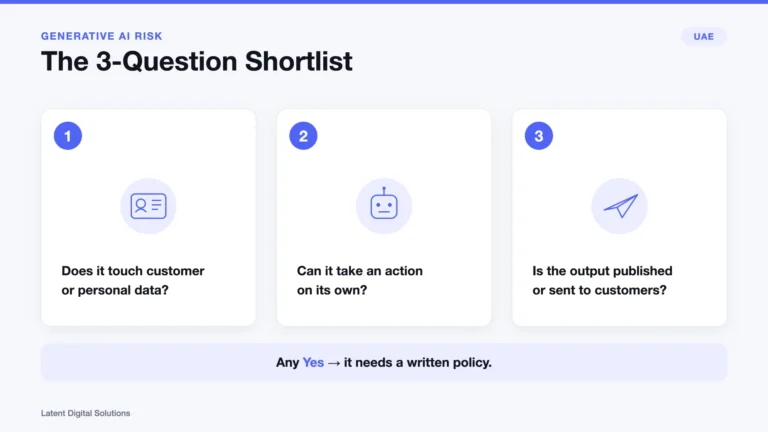
Most of them, for a business this size. Data exposure, unchecked output reaching a customer, and unclear ownership are the three biggest AI risks, and all three are addressable with a short written policy rather than software.
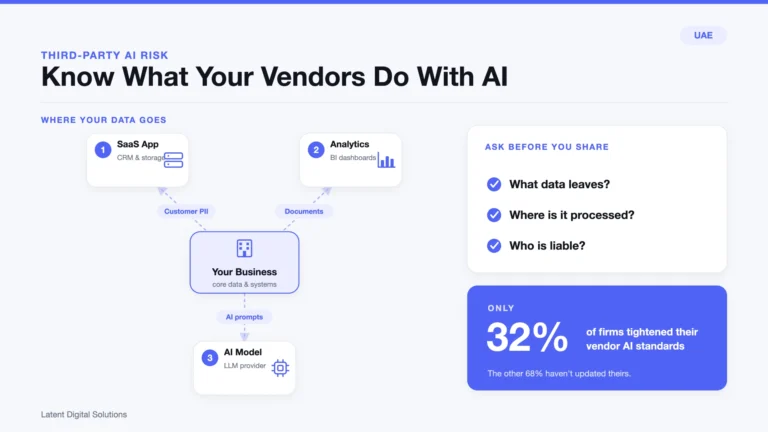
- Data exposure — decide which AI tools are allowed to see customer or financial data, and check whether the vendor trains on your input by default.
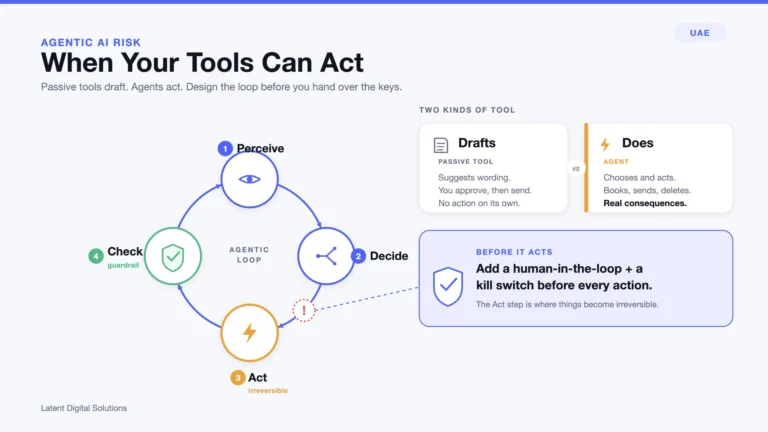
- Unchecked output — decide which AI-assisted work needs a human check before it goes external, and which doesn’t.
- Unclear ownership — name one person responsible for each AI use in the business, so risk isn’t sitting with nobody.
Written down, that’s a page, not a platform.
When do AI risk management tools actually start to earn their cost?
Once you’re tracking AI risk across enough people, systems, or tools that a written policy stops being something anyone can hold in their head, and nobody can say with confidence what’s in use.
That’s usually a scale threshold, not a maturity one: several teams, a dozen-plus AI tools in active use, or a regulatory requirement that demands an audit trail a document can’t provide. Below that threshold, a tool adds cost and process without reducing real risk, because there isn’t enough surface area for it to manage. Above it, trying to track everything manually starts creating the very blind spots a tool exists to close. If someone on your team already threw together a rough internal tracker for this and it’s starting to strain under real use, hardening that into something the business can actually depend on is closer to what our MVP to Production work covers than buying a general risk platform is.
What should you look for if you do need one?
Something that tracks what’s actually in use and flags changes, not a full enterprise governance suite. Most published AI risk management tools shortlists skip straight to the enterprise tier and never mention this cheaper, lighter option exists. For most mid-size businesses that eventually need something, a lightweight AI usage tracker beats a platform built for regulatory reporting at scale.
The enterprise tools in most shortlists solve problems around multi-jurisdiction compliance and model audit trails that a UAE business this size rarely has yet. Look for something that answers three questions well: what AI tools are in use right now, has anything changed since the last check, and is there an obvious gap in coverage. Everything past that is usually paying for capability you won’t use for years, if ever.
What’s the smallest setup that covers the real risks?
A one-page policy naming what’s allowed, who owns each use, and a quarterly ten-minute review. That’s the entire question for most businesses your size, minus any need for AI risk management tools at all.
Even large organisations are behind on formalising this. A February 2026 Economist Impact study supported by Kyocera, surveying 639 senior executives across five major financial centres, found enforced AI governance frameworks reported by only 11% of executives in Tokyo, 10% in New York, and as low as 4% in Sydney. If most large, well-resourced organisations haven’t formalised this yet, a business your size isn’t behind by starting with a policy instead of a platform. You’re doing more than most.
Conclusion
AI risk management tools are the wrong first question for most UAE businesses. The right first step is a short policy covering data exposure, output checks, and ownership, which handles the risks that genuinely apply to a business your size. A tool becomes worth evaluating once you’re managing AI across enough people and systems that the policy alone stops being enough, and that point is further away than the enterprise shortlists suggest.
If you want help working out whether your business is at that point yet, talk to us — most businesses this size aren’t, and it’s worth knowing before buying anything.
Frequently Asked Questions
How is AI used in risk management?
Some AI risk management tools are used at the enterprise level to flag anomalies, model exposure, and monitor compliance at a scale humans can’t track manually. For a business your size, the more relevant direction is managing the risk AI itself introduces (data handling, unchecked output, unclear ownership), which is a smaller, more immediate concern than using AI to manage other risks.
Which AI tool is best for risk management?
For most businesses this size, the honest answer is that a written policy beats any tool. If you do reach the scale where a tool helps, look for something that tracks what AI is actually in use and flags changes, rather than a full enterprise governance platform built for multi-jurisdiction compliance.
What are 5 risk management tools?
Enterprise shortlists typically include platforms like NIST’s framework, MetricStream, Credo.ai, SentinelOne, and Databricks’ risk tooling, each built for organisations with dedicated risk teams. None of these are the right starting point for a business managing AI risk across a handful of tools and a small team.
What are the 7 types of risk management?
Most AI risk management tools on the market are enterprise GRC platforms priced and built for a company with a dedicated risk function, NIST’s federal framework, MetricStream, Credo.ai, and similar tools all assume that scale. A UAE business without a risk team still has real AI risk to manage, and usually needs a much smaller answer than any of these tools provide, or needs to know it doesn’t need a tool at all yet.
Usually a reply within one working day.